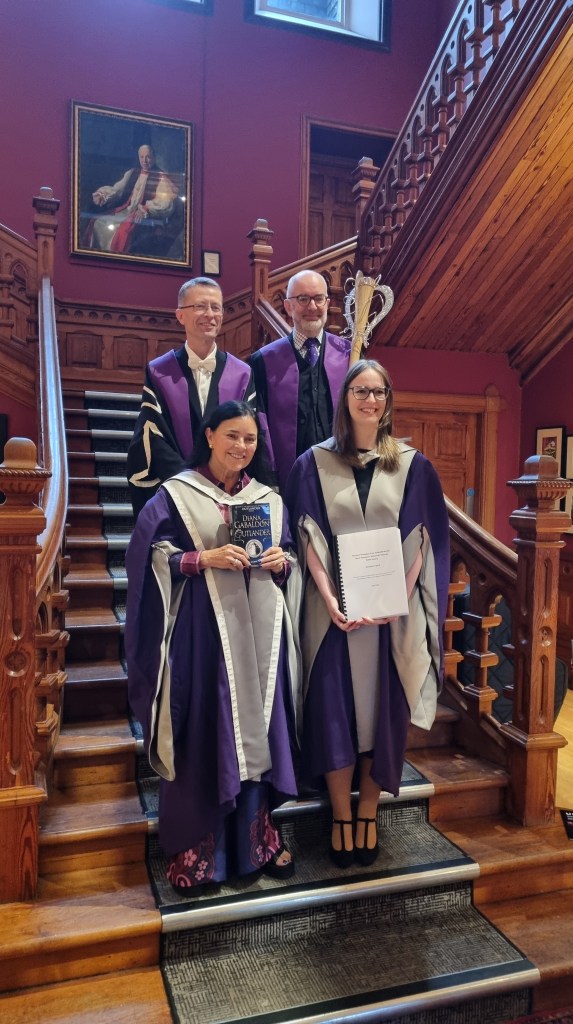
When I tell people that my doctorate is officially in history—but that I am really a “Doctor of Outlander” because of my research topic—the question everyone asks is: How much of Outlander is historically accurate? If that’s something you’ve wondered too, and if you’d like to dive deeper into what the series can teach us about history, you’ve come to the right place.
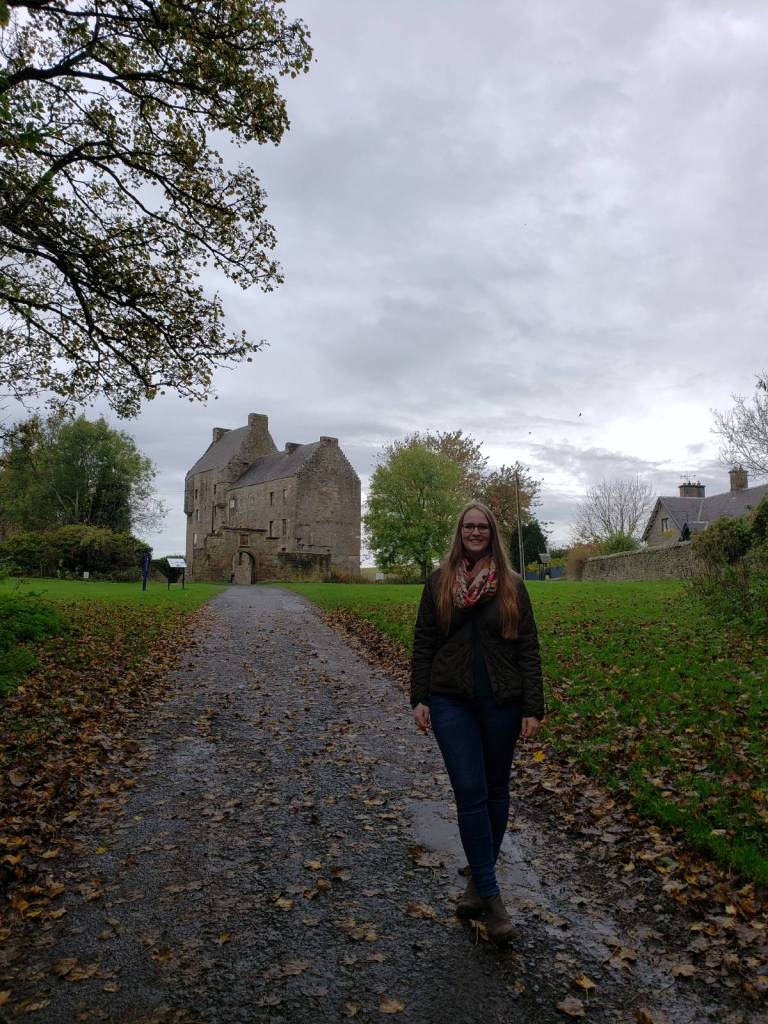
As a historian with specialist knowledge of eighteenth-century Scotland, I bring both academic rigour and storytelling flair to the world of Outlander. My research explores the real history behind the novels and television series—from Jacobite politics and Highland culture to the everyday details of life in the eighteenth century. In my doctoral thesis, I argue that Outlander itself functions as a form of public history, shaping how audiences around the world engage with Scotland’s past. Further below you can read the abstract of my thesis, and a full online version will be available to download soon. And as a fan myself, I keep up with all the theories about how the series will end—and am always happy to share my own ideas with you.
I am available for public speaking events, podcasts, and sessions with schools or universities, where I make the history behind Outlander accessible and engaging for all audiences. I am also delighted to visit fan conventions such as Landcon 2025 in Edinburgh to share my knowledge with the wider community. In addition, I welcome opportunities to collaborate with fellow researchers on academic projects that connect literature, history, and popular culture. I am equally open to speaking with newspapers, TV shows, and other media outlets. With Season 8 of Outlander, the tenth book, and the second season of the spin-off series Blood of My Blood all still to come, I am available as a commentator, expert, or anything else that is required—whether online or in person.
Abstract of my thesis
‘Narrative Strategies in the Outlander Novels: Diana Gabaldon’s Historical Fiction as Public History’ (2025)
Over the past decade, Diana Gabaldon’s Outlander novel series (1991–), a historical fiction saga following World War II combat nurse Claire Fraser as she time travels to eighteenth-century Scotland and colonial America, has garnered significant international attention due to its television adaptation (2014–), particularly in relation to Scottish and American history. Despite the substantial body of scholarship on popular culture as public history, which includes any engagement with the past beyond academic settings, the Outlander novels have yet to be considered within this framework. This interdisciplinary thesis fills this gap by positioning the Outlander novels as a form of public history.
Gabaldon’s nine Outlander novels provide a representation of the Jacobite uprising of 1745–46; of Scots’ experiences in colonial, then revolutionary, America; as well as periods of the twentieth century, such as the mid-1940s and the 1960s. This thesis examines the specific narrative strategies employed by Gabaldon that enable meaning-making of these historical periods, allowing the reader to engage with the past and form a deep connection to it. Unlike traditional academic history, historical fiction such as Gabaldon’s work engages a broad readership, shaping historical understanding through immersive storytelling. This thesis analyses four key narrative strategies: the intertwining of mid-twentieth- and mid-eighteenth-century chronologies through the time-travel trope, reinforced by narrative foreshadowing and mirroring; Gabaldon’s use of intertextuality to shape her portrayal of the past; the depiction of fictional historians; and the representation of historical research methodologies.
Recognising the Outlander novels as public history highlights the role of historical fiction in mediating the past, fostering historical consciousness and widening access to historical narratives in broader public discourse. This perspective not only expands the scope of public history scholarship but also emphasises the cultural significance of historical fiction in shaping popular memory.
 Alex Dold